
Doctors who treat heart failure say they can often hear it before they measure it. A patient who arrives at the hospital with fluid in the lungs tends to sound different: breathier, hoarser, shorter of breath between words.
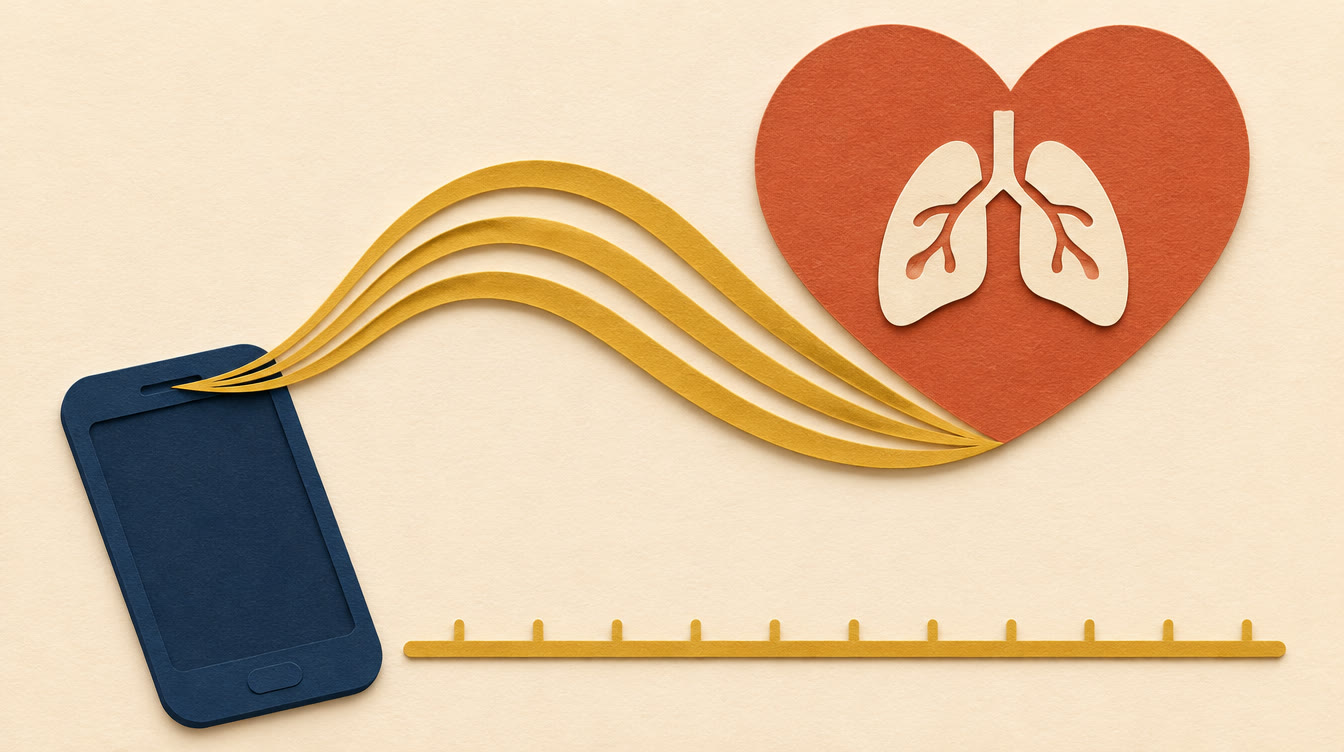
Cordio Medical, a company based in Or Yehuda, Israel, has spent nearly a decade trying to turn that bedside impression into a measurement. Its answer is HearO, an app that runs on ordinary Android and iOS phones.
On Nov. 9, Cordio announced1 results from DETECT-HF, the pivotal study meant to support its US filing. The data were presented as Late-Breaking Science at the American Heart Association Scientific Sessions 2026 in Chicago and published at the same time in JACC: Heart Failure, Cardiovascular Business reported2.
DETECT-HF at a glance
| Label | Value |
|---|---|
| Patients in the blinded study | 563 |
| Heart failure events HearO flagged in advance | >70% |
| Average warning before an event | 24.6 days |
| Scheduled daily recordings patients completed | 85% |
Source: Cordio Medical (Nov. 9, 2026)
Why fluid in the lungs is the problem to solve
Heart failure means the heart cannot pump well enough to meet the body's needs. It affects an estimated 7.7 million adults in the US, is a leading cause of hospital stays among Americans over 65 and costs the country more than $40 billion a year, according to Cordio.
Many of those hospital stays follow the same path. Fluid builds up slowly in the lungs over days or weeks, a process called congestion, until the patient struggles to breathe and needs emergency care. Catch it early, and a doctor can often adjust medicines such as diuretics, or water pills, at home.
The usual early-warning tool is the bathroom scale, because retained fluid adds weight. It is a weak signal. Daily weighing has a sensitivity of about 20% for predicting heart failure hospitalizations, meaning it flags roughly one in five, according to study lead William T. Abraham, MD, as reported by Cardiovascular Business. Patients also skip it.
Stronger options exist, but they ask more of the patient. Some require a sensor implanted in the body or a dedicated home device.
How HearO works
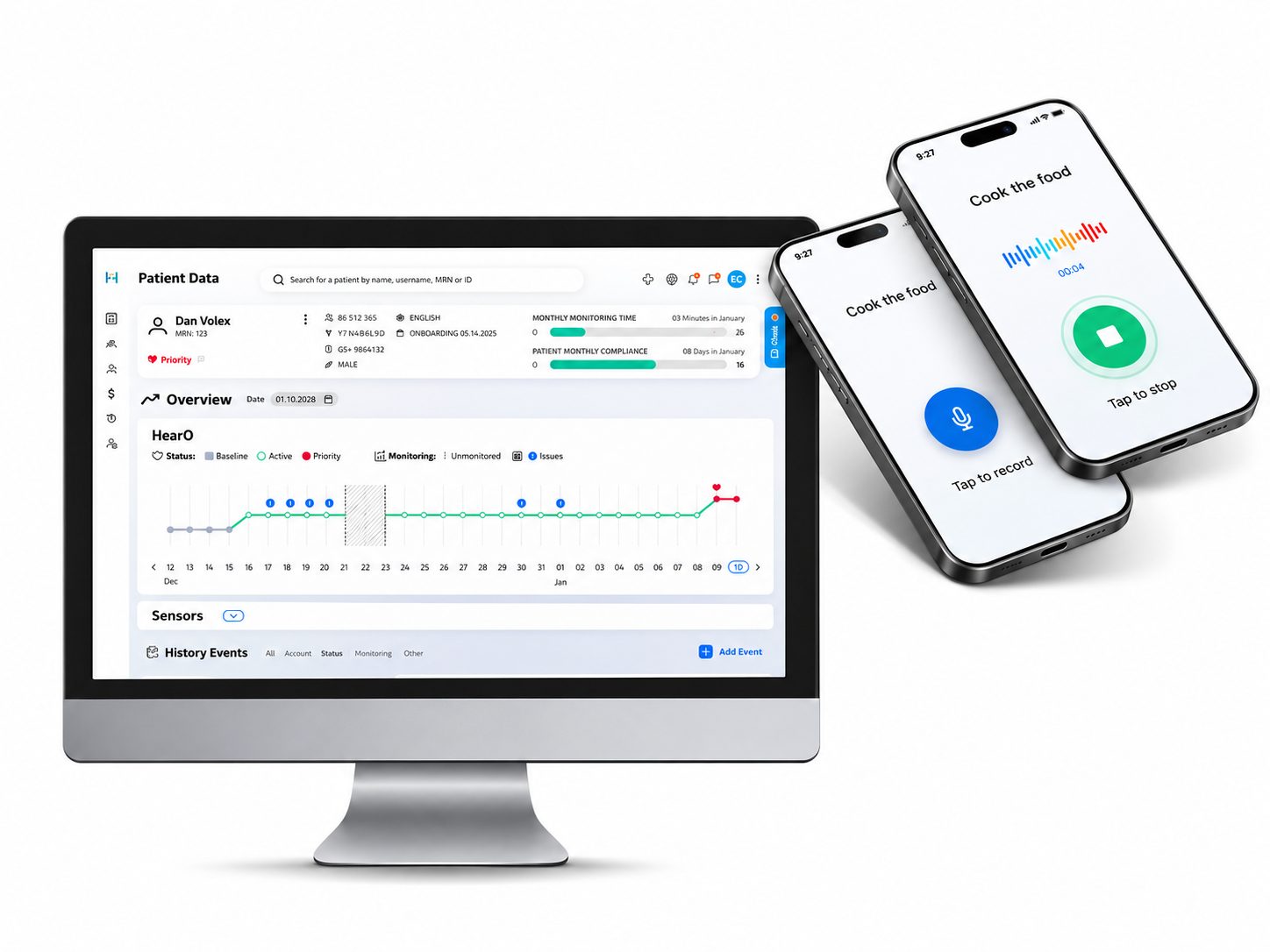
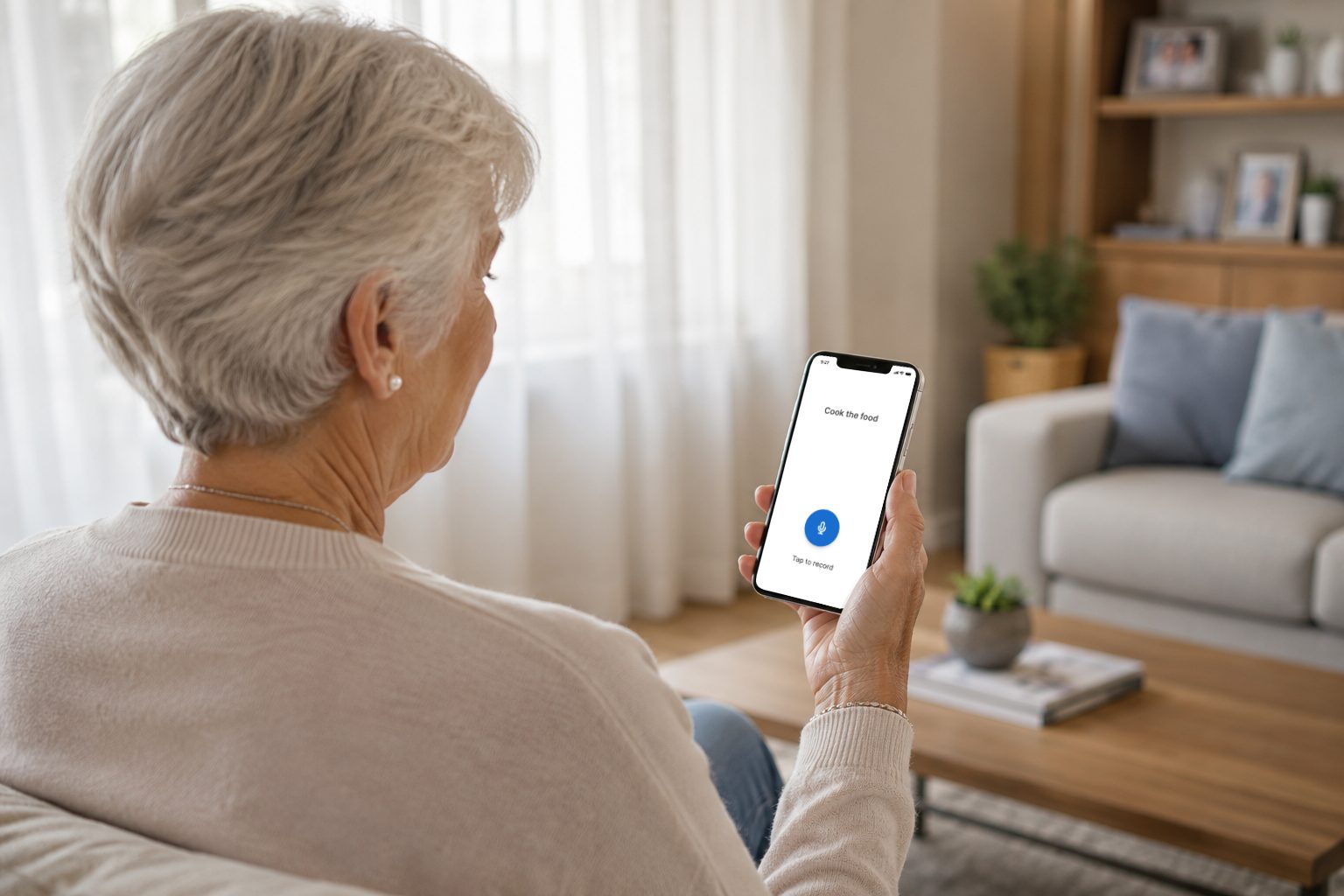
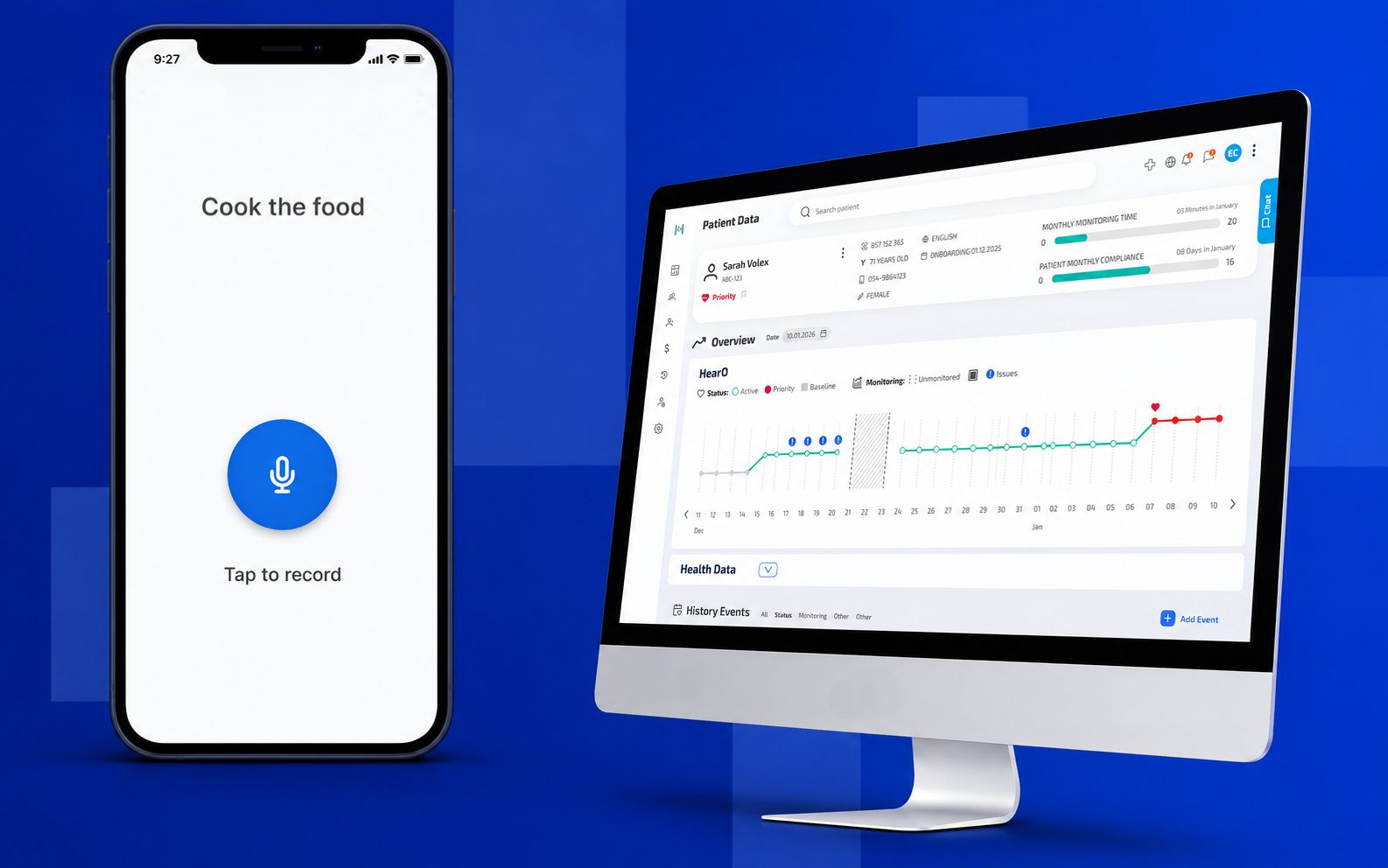
Each day, the patient records a few short sentences on a phone. HearO combines speech signal processing with AI to build a voice model for that one person, then watches for changes associated with fluid in the lungs.
When it detects a shift, it alerts the care team through a secure web portal, and clinicians decide whether to act. The app needs no extra hardware. DETECT-HF participants spoke English, Spanish, Hebrew, Russian or Arabic.
There's nothing to implant, there's nothing to wear, there's nothing to remember to take with you on a day-to-day basis.
William T. Abraham, MD, The Ohio State University Wexner Medical Center, to Cardiovascular Business
What DETECT-HF tested
DETECT-HF (NCT063786323) enrolled adults with symptomatic chronic heart failure who were stable enough to be treated as outpatients. It ran at 46 sites, mostly in the US, with international academic centers also taking part.
- Design: observational, single-arm and blinded. Every patient used the app, and there was no comparison group.
- Blinding: the system's alerts were not used to treat patients. Recordings were analyzed afterward to see whether HearO would have flagged the events that happened.
- Main measures: sensitivity, the share of real heart failure events the app caught, and the rate of unexplained alerts, or alarms with no event behind them.
- Timeline: the study started in February 2022 and its primary completion was in August 2025, according to its ClinicalTrials.gov record.
The results
HearO predicted more than 70% of heart failure events, on average 24.6 days before they happened. There were no device-related adverse events, Cordio said.
False alarms matter as much as hits, because a nurse who fields too many empty alerts stops trusting them. Unexplained alerts ran at 2.65 per patient per year, below the study's predefined goal of fewer than three.
Patients kept using it. They completed 85% of their scheduled recordings and rated the app's usability between 4.7 and 4.9 out of 5.
Share of heart failure events flagged in advance
| Label | Value |
|---|---|
| HearO voice analysis (DETECT-HF) | 70% |
| Daily weight monitoring (published estimates) | 20% |
HearO's figure is a floor: Cordio reports more than 70%. The weight figure is the approximate sensitivity Abraham cited for predicting hospitalizations. The two numbers come from different studies, not a head-to-head comparison.
Abraham, a College of Medicine Distinguished Professor at Ohio State who presented the study, said the voice biomarker's sensitivity was well above that reported for daily weighing and comparable to invasive monitoring, without an implant or added hardware.
As clinicians, we have long been able to hear the change in a patient's voice when they arrive at the hospital decompensated, but at that point it's already too late.
William T. Abraham, MD, in Cordio Medical's Nov. 9 release
What the headline numbers do not tell you
DETECT-HF shows HearO can spot trouble. It does not yet show that using it keeps people out of the hospital.
- No outcome test yet. Alerts were not acted on during the study, so it could not measure whether earlier warnings lead to fewer admissions or deaths. That takes a trial in which doctors respond to the alerts.
- No control group. The comparison with weight monitoring and implanted sensors draws on figures from other studies, not a head-to-head trial.
- Company-sponsored. Cordio funded DETECT-HF, and most of the published performance figures so far come from the company and its investigators.
- Seven in ten, not ten in ten. Close to three in ten events in the study came without a warning from the app.
The road to a US launch
HearO received Breakthrough Device designation from the FDA, a status meant to speed review of promising technologies. It holds a CE mark in Europe and is approved for use in Israel, both since 2022, Medical Device Network reported4.
Cordio will use DETECT-HF to pursue FDA marketing authorization through the De Novo pathway, which is for new types of low-to-moderate-risk devices with no existing equivalent on the US market. It plans a US launch in 2027. Until then, HearO is limited to investigational use in the US.
The study builds on more than 1,500 patients across Cordio's clinical program, including earlier results in JACC: Heart Failure and ESC Heart Failure and the COMMUNITY-HF study presented at the Heart Failure Society of America's 2025 meeting.
DETECT-HF marks the first blinded, prospective validation of AI-assisted voice analysis for heart failure monitoring.
Tamir Tal, CEO of Cordio Medical
Cordio is not alone in betting on the voice. Noah Labs' Vox, which also analyzes voice recordings to assess heart failure, received FDA Breakthrough Device designation in March 2026, according to Medical Device Network.
What to watch next
- The De Novo submission to the FDA, and how long review takes under Breakthrough status.
- An outcomes study in which clinicians act on HearO alerts, to show whether it reduces hospitalizations.
- Reimbursement, since remote monitoring only spreads when insurers and Medicare pay for it.
- Competition from other voice tools, including Noah Labs' Vox.
- Performance across languages and accents as the app moves beyond the five languages tested.